
Patellar Tendinopathy Treatment in St. Albert
Jumper’s knee shows up right where you need your knee most: landing, squatting, and pushing off. For volleyball and basketball players especially, it’s hard to train around.
We treat patellar tendinopathy in St. Albert with one-on-one physiotherapy, progressive tendon loading, and landing mechanics work built around your sport and training schedule. Whether this just started or has limited your performance for months, we’ll help your knee handle the demands of your sport again.
What is Patellar Tendinopathy?
Patellar tendinopathy, often called jumper’s knee, is irritation of the tendon that connects the kneecap to the shin bone. This tendon helps transfer force through the front of the knee during jumping, landing, squatting, sprinting, and changing direction.
Patellar tendinopathy is particularly common in jumping sports such as volleyball and basketball, but it can also affect runners, field-sport athletes, weightlifters, and active people who repeatedly load the front of the knee. Symptoms often develop when the tendon is asked to handle more stress than it is currently prepared for, especially when training volume, jumping load, or intensity increases too quickly.
At Podium Physiotherapy in St. Albert, we help identify the factors contributing to your knee pain and guide you through a structured treatment plan focused on reducing symptoms, improving tendon capacity, and helping you return to sport safely.
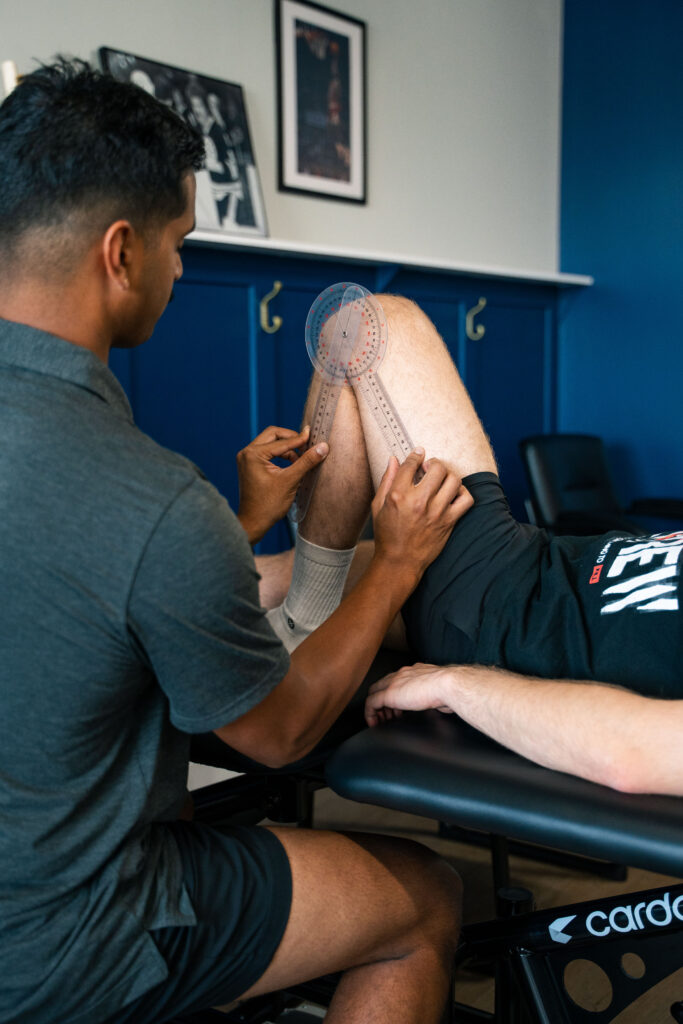
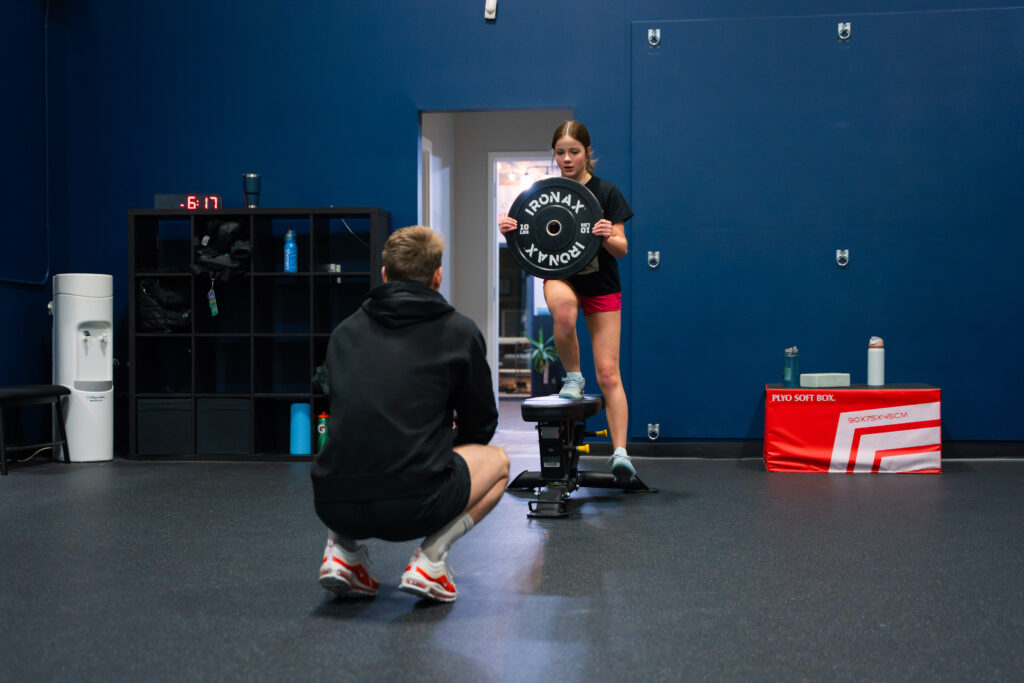
Common Symptoms of Patellar Tendinopathy
Patellar tendinopathy can cause pain, stiffness, and reduced performance during sport, training, or everyday movement. Symptoms are often felt directly below the kneecap and may worsen during jumping, landing, stairs, squats, or after activity.
Physiotherapy can help address:
- Pain below the kneecap
- Pain when jumping
- Pain during squats
- Pain with stairs or lunges
- Stiffness after activity
- Tenderness around the patellar tendon
- Discomfort during sprinting or change-of-direction movements
- Reduced jumping power
- Decreased athletic performance
- Symptoms that warm up during activity but return afterward
The goal of patellar tendinopathy treatment is not just to reduce pain. It is to rebuild the tendon’s ability to tolerate jumping, landing, strength training, and sport-specific demands.
Why Does Patellar Tendinopathy Happen?
Patellar tendinopathy often develops when the patellar tendon is repeatedly overloaded without enough time or capacity to recover. This can happen after changes in training, sport volume, strength, mechanics, or recovery habits. Common contributing factors include:
Excessive jumping volume
Rapid increases in training
Poor landing mechanics
Strength deficits
Inadequate recovery
Limited ankle, hip, or knee mobility
Poor control during squats, jumps, or landings
Returning to sport too quickly after time off
How Physiotherapy Helps
At Podium Physiotherapy, patellar tendinopathy treatment focuses on:
- Progressive tendon loading
- Quadriceps and lower-body strength training
- Hip, glute, calf, and core strengthening
- Landing mechanics
- Plyometric progression
- Sport-specific rehabilitation
- Manual therapy
- Activity modification
- Education on training load and recovery
- Strategies to reduce recurrence
Physiotherapy helps guide your recovery by matching the right exercises to your current symptoms, sport demands, and tendon capacity. In the early stages, treatment may focus on reducing tendon irritation, modifying painful activities, and introducing safe loading exercises. As symptoms improve, your program becomes more strength-focused, helping your knee tolerate squats, stairs, jumps, and sport-specific movement.
For volleyball, basketball, and court-sport athletes, treatment may also include jump and landing analysis, plyometric training, change-of-direction drills, and a gradual return-to-sport plan. This helps bridge the gap between pain relief and being ready to perform again.
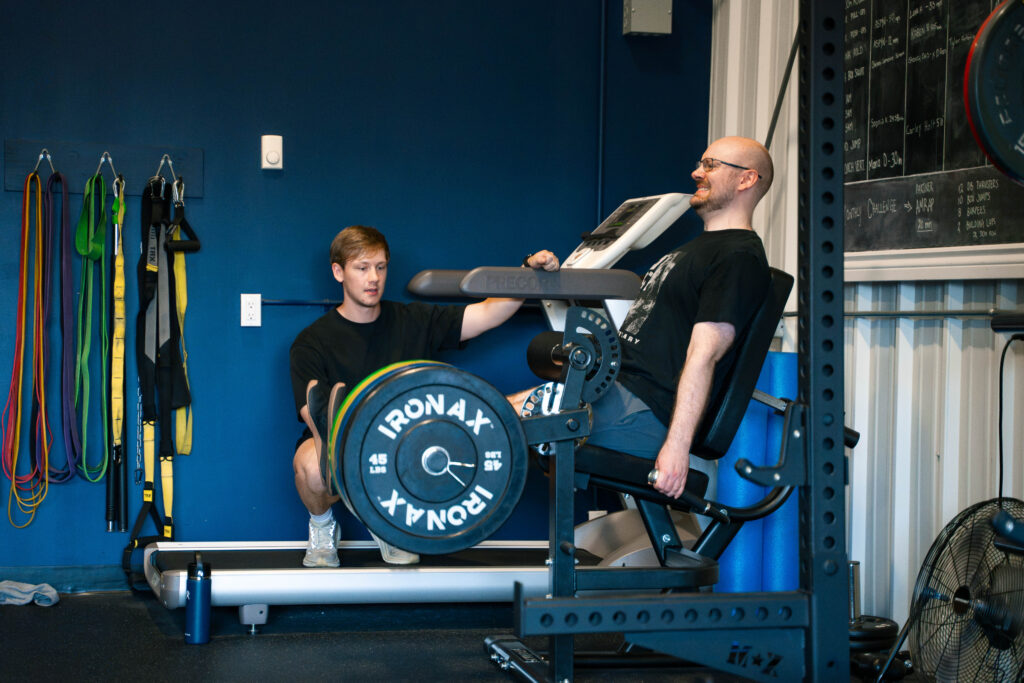
Recovery Timeline
Recovery from patellar tendinopathy depends on how long symptoms have been present, how irritated the tendon is, and how consistently the tendon is strengthened through rehab. Your physiotherapist will adjust your plan based on your symptoms, strength, jumping tolerance, and sport goals.
Mild Cases: 2–6 Weeks
- Reduce tendon irritation
- Modify painful jumping or training volume
- Begin progressive tendon loading
Moderate Cases: 2–4 Months
- Build quadriceps and lower-body strength
- Improve landing mechanics
- Gradually reintroduce jumping and sport drills
Chronic Cases: 6+ Months
- Address long-term tendon sensitivity
- Progress heavier strengthening
- Rebuild tolerance for higher jumping volume
Return to Sport
- Follow a structured plyometric progression
- Reintroduce jumping, cutting, and competition gradually
- Continue strength work to reduce recurrence
Why Choose Podium Physiotherapy?
At Podium Physiotherapy, your full appointment is spent working directly with a physiotherapist. We take the time to understand your symptoms, sport, training volume, jumping demands, and the movements that aggravate your knee pain. Your plan is not one-size-fits-all. It is built around your tendon capacity, your sport, and your recovery progress.
Our St. Albert clinic has extensive experience treating volleyball, basketball, and court-sport athletes. We understand the demands of jumping sports and tailor treatment accordingly using hands-on physiotherapy, rehab science, progressive strength training, landing mechanics, and sport-specific return-to-play planning.
Melissa Hittinger
★★★★★
We had been referred by a friend when my teenage daughter was struggling with sports related knee and shoulder injuries. Brendan was the first to really listen to her concerns and take the time to work through them with her without just a rushed prescriptive plan. He provided specific exercises that were not painful but very effective in getting her back into play. His personal experience with sports, his education and the way he listens makes for a well rounded approach to recovery and return to sport. Highly recommend!
Katherine Herron
★★★★★
We had an amazing experience with Brendan at Podium Physiotherapy in St. Albert, while my daughter was recovering from a volleyball-related knee injury in early 2025. From the very first appointment, he was very knowledgeable, supportive, and incredibly thorough in creating a personalized recovery plan. Not only did he help her heal physically, but also focused on building strength and preventing future injuries—something that gave her real confidence to get back on the court.
Book Patellar Tendinopathy Treatment in St. Albert
Patellar tendinopathy can be frustrating, especially when it limits jumping, squatting, running, training, or sport performance. The right physiotherapy plan can help you manage pain, rebuild strength, and improve your tendon’s ability to handle load over time.
At Podium Physiotherapy, we help athletes and active individuals in St. Albert recover from jumper’s knee with a personalized plan designed around their symptoms, sport, training schedule, and goals.
Book your patellar tendinopathy treatment appointment online today.
Patellar Tendinopathy FAQs
Pain below the kneecap during jumping is a common sign of patellar tendinopathy. Jumping and landing place high load through the patellar tendon, especially in sports like volleyball and basketball.
Most cases of jumper’s knee improve successfully with physiotherapy and progressive strengthening. Surgery is not usually the first option and is typically only considered when long-term symptoms do not respond to conservative treatment.
Not always. Many athletes can continue modified participation while undergoing rehabilitation. Your physiotherapist can help you decide which activities to reduce, modify, or temporarily avoid while your tendon improves.
Volleyball and basketball involve repeated jumping, landing, sprinting, and quick direction changes. These movements place significant stress on the patellar tendon, especially when training load or competition volume increases quickly.
Progressive strengthening exercises targeting the quadriceps and lower body are commonly prescribed. Depending on your stage of recovery, your plan may include isometric holds, squats, split squats, step-downs, heavy slow resistance training, plyometrics, and landing drills.
Recovery may take anywhere from six weeks to several months depending on symptom severity, how long the pain has been present, and how consistently the tendon is strengthened through rehab.
Yes. Symptoms that persist for months or years often require a more structured rehabilitation approach. Chronic cases usually need careful load management, progressive strengthening, and a gradual return to sport.
Diagnosis is often made clinically based on your symptoms, history, and physical assessment. Imaging may occasionally be recommended if symptoms are not improving, the diagnosis is unclear, or another condition needs to be ruled out.
Posted on Google
 CG
CGTrustindex verifies that the original source of the review is Google.
I can’t recommend Fathi enough! Coming back to the gym after having my baby was intimidating, but he made me feel comfortable and supported from the very beginning. He’s been incredibly patient, knowledgeable, and always finds creative ways to adapt workouts to what my body needs. Along the way, he even diagnosed an issue I’ve had for most of my adult life! It has been almost life changing re-discovering my strength and self and I owe that all to Fathi. If you’re looking for a personal trainer who genuinely cares and knows how to help you achieve your goals, I highly recommend Fathi!Posted on Google C HoltI’ve been coming to Podium for the last five months and have been honestly very impressed. Fathi is a fantastic trainer who is knowledgeable, encouraging, and genuinely invested in helping me reach my goals. Nathan is a knowledgeable and compassionate physiotherapist, and I really appreciate how they work together to support both training and recovery. I highly recommend Podium if you’re looking for a great place to train and take care of your overall health and wellness.Posted on Google
 Grace CrockerI came to Podium for help with hip issues from a running injury. Brendan has been amazing with healing and strengthening my hip to get me back into running. Over 4 months now and have started seeing results and have slowly gotten back into running. Definitely recommend to anyone looking for a physio!Posted on Google
 Ken KBrendan rehabed my surgically repaired bicep 3 years ago and is not in the process of rehabing my surgically repaired pectoral tendon. He is a great physiotherapist.Posted on Google
 Hannah ANathan was fantastic at Podium Physiotherapy! He addressed all my concerns and gave me effective solutions. I love that the clinic has a full gym and they lead you through many rehab exercises.Posted on Google
 Nate BenoitI had an excellent experience with Nathan M and Zach W! They both helped me find much needed relief from long term back pain through hands-on work and through targeted exercises to eliminate the issues all together! Highly recommend!Posted on Google
 Ross OudkerkNathan is an amazing physio, knowledgeable and great to converse with to determine the best form of care/diagnosis. Excellent facility, & equipment too. Highly recommend!Posted on Google
 Emma Mwent for a wrist injury and had Nathan helping me and he’s great. very nice and very clear about the treatment and exercises needed, also gets back to me really quick when I email with questions. all of the staff are very friendly and helpful.Posted on Google
 Shantel LeaI am recovering from a ruptured Achilles which is as much mental as physical. I tried another physio and had sub par treatment and results. Brendan and Podium have been a game changer for me. I feel positive for the first time about my recovery. The exercises are tailored to accommodate my RA as well. I feel stronger each week and look forward to returning to an active lifestyle!